The Gaming Hardware That Asia Loved and America Never Got to Play
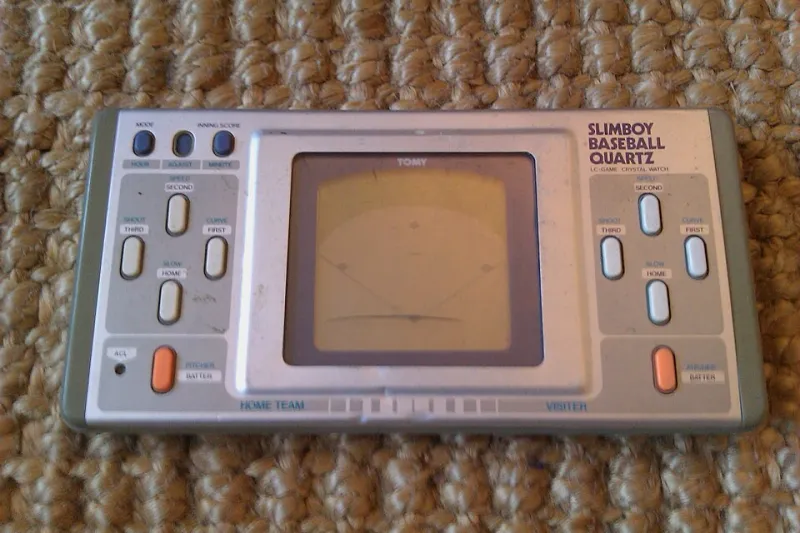
Photo: Espen Klem from Oslo, Norway, CC BY 2.0, via Wikimedia Commons
The Machines That History Forgot (In America, Anyway)
Ask any American retro gaming collector what the golden age of handhelds looks like, and you'll probably hear about the Game Boy, the Game Gear, maybe the Atari Lynx if they're really into it. Mention the WonderSwan and you'll get blank stares. Bring up the PC-Engine GT and suddenly you're the weird person at the swap meet.
The thing is, gaming hardware history in Asia runs deep and strange and wildly creative in ways that Western markets never fully experienced. While American consumers were funneled into a fairly clean Nintendo-vs-Sega-vs-Sony narrative, Asian markets — particularly Japan — were running parallel experiments with devices that pushed technology in genuinely different directions. Some of them flopped. A lot of them built massive, devoted followings. Almost none of them made it to the US in any meaningful way.
Right now, retro collectors are discovering this alternate hardware timeline, and prices on import platforms are climbing fast.
The WonderSwan: Yokoi's Last Masterpiece
Gunpei Yokoi is one of the most important figures in gaming history. He designed the Game Boy. He created the D-pad. He was Nintendo's hardware genius before a falling out led to his departure and, eventually, his death in a 1997 traffic accident.
Before he died, he built one more handheld: the WonderSwan, released by Bandai in Japan in 1999. It never came to the US. Not officially, anyway.
The WonderSwan was a vertical handheld — portrait orientation, not landscape — with a battery life that embarrassed the Game Boy Color. A single AA battery could run it for 30-40 hours. It had a unique dual D-pad layout that let players rotate the device and use it horizontally or vertically depending on the game. The library leaned heavily into RPGs, puzzle games, and Final Fantasy ports that Square specifically tailored for the platform.
At its peak, the WonderSwan held about 8% of Japan's handheld market — not dominant, but genuinely competitive. In the US? Complete obscurity. Today, a complete WonderSwan Color setup with a handful of good titles will run you well north of $150 on import sites, and the price keeps moving.
PC-Engine: The Console That Beat Nintendo (In Japan)
American gamers know the TurboGrafx-16. Most of them know it as a footnote — Hudson Soft's weird also-ran that showed up briefly in the US and disappeared. What they often don't know is that the PC-Engine, the Japanese version of that same hardware, absolutely dominated the Japanese market in the late 1980s.
The PC-Engine outsold the Famicom (NES) in Japan for stretches of the late 80s. It had an add-on CD-ROM drive years before anyone else. It got a portable version — the PC-Engine GT — that was playing full console-quality games while the Game Boy was still in black and white.
The US version, the TurboGrafx-16, launched poorly, got minimal software support, and faded fast. The Japanese PC-Engine kept going, kept getting hardware revisions, and built a library that collectors now hunt aggressively. The PC-Engine Duo, which combined the base console and CD-ROM unit into a single machine, is particularly sought after — clean units with documentation regularly sell for $300-500 on the import market.
Taito's Type X Arcade System: The Cabinet That Stayed Home
Arcade culture in Japan never died the way it did in the US. When American arcades collapsed in the late 90s and early 2000s, Japanese game centers kept evolving. And the hardware powering those cabinets kept getting more sophisticated.
Taito's Type X series, which debuted in the mid-2000s, was essentially a Windows-based PC in an arcade cabinet — but designed specifically for the high-precision demands of competitive arcade gaming. The Type X2 and Type X3 powered some of the most important fighting games of that era, including BlazBlue and Street Fighter IV during its arcade run.
In the US, those games arrived as console ports. The experience of playing them on proper arcade hardware — with the input latency, the monitor calibration, the cabinet feel — was something almost no American player ever accessed. The few Type X cabinets that made it to US import collectors are treated like relics, because in a very real sense, they are.
Why Did So Much of This Stay in Asia?
The short answer is risk. American publishers and distributors in the 80s and 90s were operating in a market where shelf space was scarce and consumer patience for unfamiliar hardware was limited. Bringing over a Japanese platform meant building a library, translating games, marketing a concept, and competing against established brands with deep pockets.
Most of the time, the math didn't work. So things stayed home.
Regulatory differences played a role too. Japanese electronics standards, software ratings systems, and distribution networks were built around their domestic market, and retrofitting products for US compliance added costs that often killed import projects before they started.
The Collector Wave Is Changing Things
Here's where it gets interesting for people paying attention right now. The retro gaming collector market has gone genuinely global over the last five years. Platforms like Yahoo! Japan Auctions — accessible through proxy services — have opened up Japanese collector markets to American buyers in ways that simply didn't exist a decade ago.
Prices on hardware like the Neo Geo Pocket Color (another criminally underrated SNK handheld), the Sharp X68000 (a Japanese home computer with arcade-perfect ports that American gamers never touched), and the various PC-Engine variants have all climbed significantly. Collectors who got in early are sitting on hardware that's appreciated considerably.
More importantly, communities are forming around this stuff. Retro gaming Discord servers dedicated to Japanese hardware imports. YouTube channels documenting obscure Asian platforms. Reddit threads comparing condition grades on WonderSwan cartridges.
America is finally discovering the gaming hardware history it missed the first time around — just 30 years late and at significantly higher prices. Better late than never, though. Some of these machines deserve the attention.