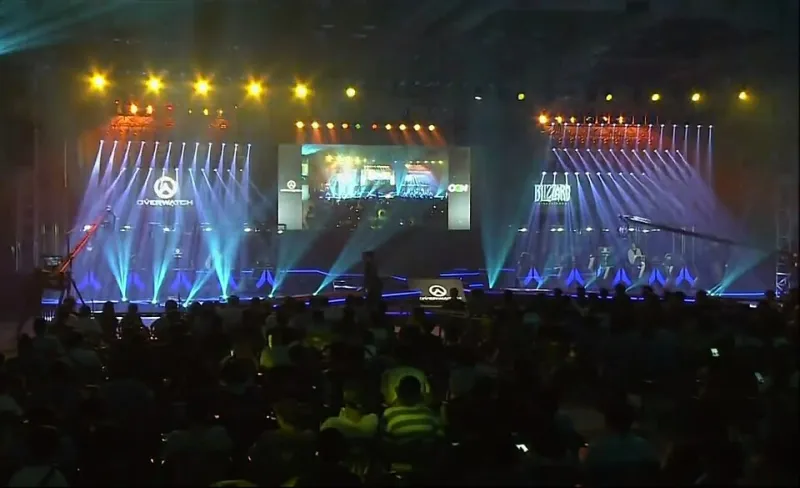
Your Phone Is the Future of Gaming — Asia Already Figured That Out Years Ago

Photo: USAID U.S. Agency for International Development, Public domain, via Wikimedia Commons
Here's a thought experiment: imagine a world where the most-played competitive game runs on a device that fits in your jeans pocket, where esports arenas fill up for mobile tournaments the same way American stadiums fill up for the Super Bowl, and where the biggest gaming companies aren't racing to build the next $500 console — they're racing to make sure their title loads smoothly on a mid-range Android phone.
For hundreds of millions of people across Asia, that's not a thought experiment. That's just Tuesday.
Asia's mobile gaming market has officially crossed the $100 billion threshold, and the numbers keep climbing. The US, by comparison, is still largely a console-and-PC-first market — but the cultural and economic forces that made mobile king in Asia are slowly, steadily reshaping how Americans think about gaming too. The question isn't really if mobile gaming will dominate the US market. It's when — and which Asian-born titles and platforms will lead the charge.
Why Mobile Won in Asia First
Understanding the mobile gaming explosion in Asia means understanding some basic economic and infrastructure realities that don't always translate cleanly to an American context.
In many parts of Asia — particularly across Southeast Asia and India — smartphones reached mass adoption before home internet infrastructure was widespread enough to support PC gaming at scale. For hundreds of millions of new gamers, a mid-range Android phone was their first and primary gaming device. It wasn't a secondary screen. It was the screen.
China's trajectory is slightly different but equally instructive. The country's gaming market is dominated by companies like Tencent and NetEase, which recognized early that mobile distribution would eventually dwarf PC and console. Their flagship titles were designed from the ground up for mobile play sessions — shorter bursts, touch-optimized controls, deep social integration. Honor of Kings, Tencent's mobile MOBA, has over 100 million daily active users. That number is almost incomprehensible in a US context, where even the most popular titles rarely crack 10 million daily players across all platforms.
In India, BGMI (Battlegrounds Mobile India) rebuilt an audience that was temporarily cut off from the global PUBG Mobile ecosystem and turned it into one of the most engaged mobile gaming communities on the planet. Mobile esports tournaments in India draw live audiences and streaming numbers that rival traditional sports broadcasts in the country.
The Philippines has arguably gone furthest in normalizing mobile esports as legitimate competitive sport. Mobile Legends: Bang Bang tournaments are broadcast on national television. Professional mobile esports players are celebrities. The infrastructure — from coaching academies to sponsorship deals to broadcast production — has matured to a level that would surprise most American gaming observers.
The Tech Is Finally Catching Up
One reason mobile gaming hasn't fully replicated its Asian success in the US yet is hardware. American gamers, accustomed to the visual fidelity of high-end PCs and current-gen consoles, have historically dismissed mobile as a lesser experience. And honestly, for a long time, they weren't entirely wrong.
But that gap is closing at a remarkable pace. The latest generation of mobile processors — Snapdragon 8-series chips, Apple's A-series silicon — deliver gaming performance that would have seemed impossible on a handheld device just five years ago. Games like Genshin Impact (developed by Chinese studio miHoYo) have demonstrated that mobile can deliver console-quality visuals and open-world depth, and they've done it while building massive audiences in both Asia and the West simultaneously.
Cloud gaming is the other piece of the puzzle. Services that stream high-fidelity game experiences to any screen — including phones — are maturing rapidly. In parts of Asia with fast, affordable 5G infrastructure, cloud gaming is already mainstream. As 5G coverage expands across the US and streaming latency continues to improve, the practical advantages of owning expensive dedicated hardware start to erode.
Which Asian Titles Are Coming for the US Market
Some of the most interesting gaming developments to watch over the next three to five years involve Asian-developed mobile titles that are either already building US audiences or are clearly positioned to do so.
Genshin Impact is the obvious current example — a Chinese-developed mobile gacha RPG that has generated billions in revenue globally, with a substantial and passionate American fanbase. Its success has proven that US players will engage deeply with a mobile-first title if the content quality is there.
Honor of Kings has been slowly expanding westward under various localized names, and industry analysts expect a more aggressive international push in the coming years. If Tencent can crack the North American MOBA market — currently dominated by League of Legends on PC — it would represent a seismic shift.
Mobile esports infrastructure is another area to watch. Southeast Asian tournament operators and broadcast teams have built lean, efficient esports production models that work at a fraction of the cost of traditional PC/console esports. As mobile esports viewership grows in the US, those operators are well-positioned to bring their expertise to the American market.
What Has to Change for Mobile to Win in America
The honest answer is: not that much, and mostly things that are already changing.
US gaming culture has a deep emotional attachment to controllers and dedicated hardware. That's real, and it won't disappear overnight. But the demographics of gaming are shifting. Younger players — particularly Gen Z and Gen Alpha — are growing up in a mobile-first world. For them, the idea that "real gaming" requires a console is already starting to feel a little dated.
Monetization models will also need to evolve. American players have historically pushed back hard against the gacha mechanics and aggressive in-app purchase structures common in Asian mobile titles. Developers targeting the US market are increasingly aware of this and are experimenting with hybrid models that balance live-service revenue with more consumer-friendly pricing.
The bottom line is that Asia didn't just build a big mobile gaming market. It built a blueprint — for how to design games for mobile-first audiences, how to run mobile esports, how to monetize at scale, and how to make gaming genuinely portable without sacrificing depth or community. That blueprint is already being adapted for Western markets.
Your phone is the future of gaming. Asia figured that out a long time ago. America is just starting to catch on.